WhatsApp for Retail: How to Turn Conversations Into Conversions
WhatsApp has a 98% open rate. Here's how forward-thinking merchants are using it for follow-ups, promotions, and customer support.
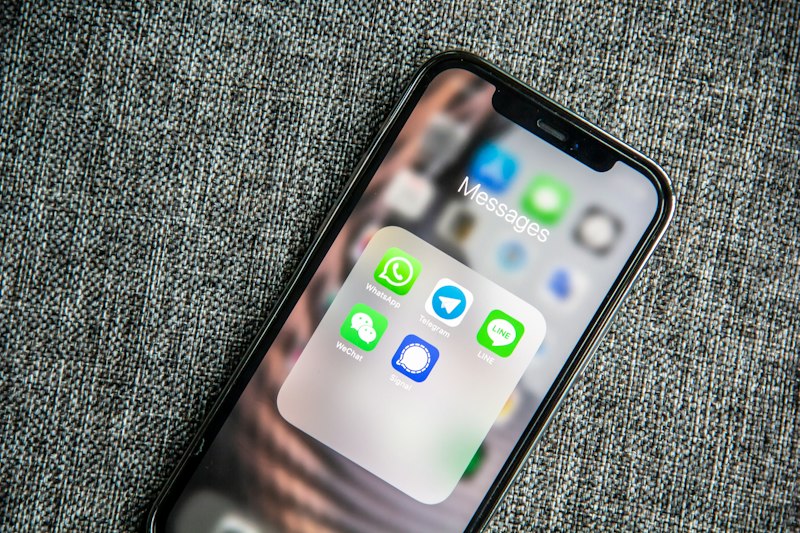
Email open rates hover around 15–20% on a good day. WhatsApp messages are opened over 95% of the time, often within minutes of being sent. For retailers trying to reach customers directly and personally, this is not a small difference — it's a fundamentally different communication channel with fundamentally different economics.
But WhatsApp's effectiveness is directly proportional to how it's used. Merchants who send generic promotional blasts see opt-out rates spike and brand perception suffer. Merchants who use it for genuine, personal conversations — following up on purchases, offering personalized recommendations, handling service issues in real time — build the kind of customer relationships that drive repeat purchases and word-of-mouth. The difference is in the approach, and this guide covers both.
Why WhatsApp Converts Better Than Any Other Channel
The psychological reason WhatsApp converts better is that it's the channel people use for their most personal relationships. Messages from a retailer who has integrated appropriately into that space feel different from a marketing email in a cluttered inbox or an ad in a social feed. They feel personal, immediate, and worthy of attention.
This creates both an opportunity and a responsibility. The opportunity is real engagement at a scale that other channels can't match. A WhatsApp message from a retailer a customer actually likes can feel like a message from a knowledgeable friend: 'I know you bought those hiking boots last month — we just got in a waterproofing spray that works brilliantly with them, thought of you.' That message converts at a radically higher rate than any email.
The responsibility is not to abuse the channel. WhatsApp is where people talk to their family and close friends. Irrelevant, spammy, or overly frequent messages feel like an intrusion in a way that email doesn't. Opt-out rates are higher when customers feel their WhatsApp is being treated like an email list. Every message must justify being there.
Setting Up WhatsApp Business the Right Way
WhatsApp Business (the free app) and WhatsApp Business API (the paid, scalable version) have different capabilities. For a single store or a small team, WhatsApp Business provides catalogue features, quick replies, away messages, and basic analytics. For multi-location retailers or those wanting to automate messaging at scale, the WhatsApp Business API integrated with a CRM or messaging platform is the right choice.
Regardless of which version you use, setup should include a complete business profile with your address, opening hours, and a brief description. Use a WhatsApp display name that matches your store name. Set up a greeting message for new contacts. Configure away messages for outside business hours.
Most importantly, build your contact list properly. Customers should opt into WhatsApp communication explicitly — either through a checkout checkbox, an in-store sign-up, or a specific invitation with a clear description of what they'll receive. A small, highly engaged list of opted-in customers generates far better results than a large list of contacts who don't remember agreeing to hear from you.
The Best WhatsApp Use Cases for Retail
These applications consistently deliver the highest return on WhatsApp investment:
- Order confirmations and delivery updates — customers expect and appreciate this, and it sets a positive tone
- Personalized product recommendations based on purchase history — 'knowing' your customer creates trust and drives upsells
- New arrival notifications for specific customer interests — 'I know you like X, we just got Y in'
- Customer service — resolving questions, handling complaints, processing requests in real time
- Appointment reminders and confirmations for services businesses
- Win-back messages for customers who haven't purchased in 60+ days — conversational, personal tone works best
- VIP access and early previews for your best customers — makes them feel genuinely valued
"Merchants using WhatsApp for personalized customer follow-ups report response rates 8–12x higher than equivalent email campaigns. Conversion rates on WhatsApp-driven promotions average 3–5x higher than SMS equivalents."
Templates and Tone: Sounding Human, Not Robotic
The biggest WhatsApp mistake after sending irrelevant content is sending robotic content. Messages that read like they were generated by a computer — formal language, corporate phrasing, generic pleasantries — squander the channel's advantage. The whole point of WhatsApp is that it feels personal. Your messages need to reflect that.
Write WhatsApp messages the way you'd write a text to a friend who asked about a product. Short sentences. Contractions. Maybe an emoji where it fits naturally. No 'Dear Valued Customer.' No 'Please find enclosed herewith.' Just clear, warm, human communication.
Always use the customer's name. Always reference something specific to them — a recent purchase, a question they asked, a preference they've shared. The more specific and relevant the message, the more it feels like the business actually knows and cares about the individual customer. That feeling is exactly what creates loyalty.
Scaling Without Losing the Personal Touch
The challenge with WhatsApp as you grow is maintaining the personal quality while handling volume. This is where the WhatsApp Business API and CRM integration become essential. With the right setup, you can send personalized messages — with real customer names, real purchase references, real relevant recommendations — at scale, triggered automatically by customer behavior.
A customer who buys running shoes triggers an automated message 7 days later: 'Hey [Name], hope you're loving the [product]! We just got in [complementary product] — worth checking out if you're running on trails.' That message was generated automatically, but to the customer it feels personal and thoughtful.
The automation handles the volume; the personalization handles the perception. Keep response handling human — when customers reply, a real person should respond, not a bot. This hybrid approach (automated outreach, human response) combines the efficiency of automation with the authenticity of real conversation.
Compliance and Best Practices
WhatsApp has strict policies about business use, and violation of these policies can result in your business account being banned. This is not a theoretical risk — it happens regularly to businesses that abuse the platform.
Never send messages to contacts who haven't explicitly opted in. Never send messages that are purely promotional without providing value. Keep messaging frequency appropriate — for most retail contexts, once a week is the maximum for promotional messages, with service messages (order updates, responses to inquiries) being unrestricted.
Always make opting out easy. A simple 'Reply STOP to unsubscribe from these messages' in your initial message gives customers control and demonstrates respect for their preferences. The customers who stay opted in after seeing this are your most engaged — and most valuable — WhatsApp contacts.
Frequently Asked Questions
Ready to Put This Into Practice?
Merchant Stack gives you the tools to automate, optimize, and grow your retail operation — starting today.
Request Early Access