Building a Lean Retail Operation: Cut Waste Without Cutting Quality
Lean principles aren't just for manufacturing. Here's how to apply them to your retail workflows and reclaim hours every week.

Lean manufacturing was developed at Toyota in the 1950s and has since become one of the most influential management philosophies in history. The core idea is simple: identify and eliminate waste — anything that consumes resources without creating value for the customer. In manufacturing, waste might be excess inventory, unnecessary movement, or defects. In retail, it looks a bit different, but the principle is exactly the same.
The lean approach is particularly powerful for independent and mid-sized retailers because waste compounds differently at that scale. A large chain can absorb significant inefficiency through sheer volume. An independent operator or regional chain can't. Every hour of wasted staff time, every unnecessary process step, every piece of information that has to be re-entered because two systems don't talk — these things hurt you more than they hurt a competitor with 10x your resource base.
The Eight Types of Waste in Retail
Lean thinking identifies eight categories of waste. All eight appear in retail operations, though they look different from their manufacturing counterparts. Overproduction in retail is ordering too much inventory — buying more than you'll sell before prices drop or demand shifts. Waiting is your team standing idle while a process bottleneck resolves — a manager who has to approve every small decision, a supplier that takes three days to confirm stock levels.
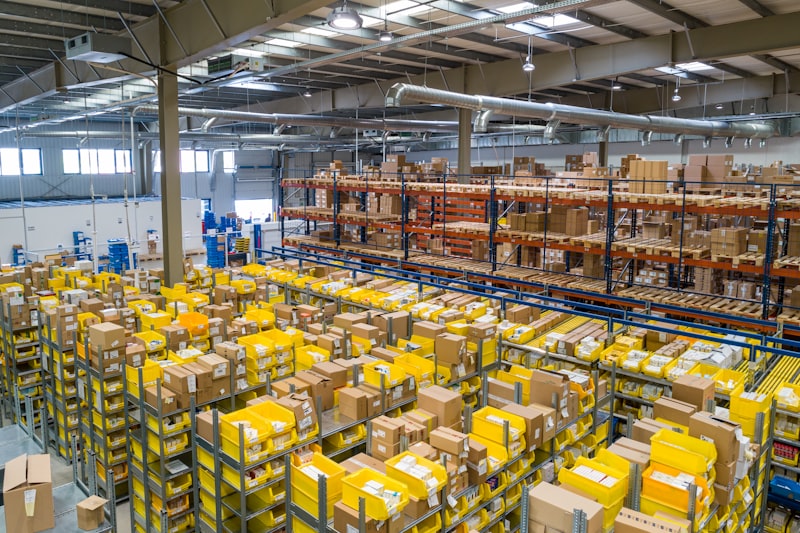
Transportation waste is unnecessary movement of products or information. In retail, this often appears as moving inventory multiple times — from delivery to stock room, stock room to floor, floor back to stock room — when a direct flow would be faster. Overprocessing is doing more work than the customer requires — lengthy check-out procedures, complicated return processes, manual data entry that could be automated.
Inventory waste is excess stock that ties up capital and space. Defects are products that arrive damaged, orders that are picked incorrectly, and customer complaints that require rework. Skills waste — often called the eighth waste — is underutilizing your team's capabilities, which in retail often means having talented people doing administrative work that software could handle.
Start With a Waste Walk
The most practical way to start applying lean principles is to do a waste walk. This is exactly what it sounds like: walking through your operation with fresh eyes, specifically looking for waste. The key is to look for it explicitly — not to evaluate overall performance, but to ask at each step: is this step necessary? Is it done as efficiently as possible? What would happen if we eliminated it?
Do the waste walk at a busy time of day, not when the store is quiet. Waste is often most visible when the team is under pressure — that's when bottlenecks appear, when shortcuts get taken, and when the cost of inefficient processes becomes most obvious. Bring a notebook and record what you observe without intervening. You're diagnosing before you prescribe.
Involve your team in the analysis. The people doing the work every day almost always know where the waste is — they just haven't been asked, or they've stopped seeing it because it's become normal. One of the most common things you hear when you ask frontline staff 'what wastes the most time in your day?' is 'no one's ever asked me that before.'
The Highest-Impact Waste Reduction Opportunities in Retail
Based on waste audits across dozens of retail operations, these are consistently the biggest wins:
- Manual data entry that duplicates information already captured in another system
- Approval processes that require a manager for decisions that could be delegated
- Stock room organization that requires multiple searches to locate inventory
- Return processing workflows that involve too many handoffs and manual steps
- End-of-day reporting that's done manually when the data is already in a POS system
- Communication processes where the same update is sent through multiple channels (text, email, team chat)
- Receiving processes where products are moved more than twice before reaching their final location
"Retailers who conduct formal waste audits and address the top three findings reclaim an average of 6–10 hours of staff time per week per location. That's 300–500 hours per year that can be redirected to customer-facing activity."
Streamlining Your Receiving Process
The receiving process is one of the most waste-dense parts of retail operations, yet it's rarely examined systematically. Products arrive, get checked against a delivery note, are moved to the stock room, get logged in the inventory system (sometimes), and eventually make it to the floor. In many operations, this involves unnecessary movement, delays while someone finds the right system to update, and frequent errors that require rework.
A lean receiving process has four characteristics: it's predictable (deliveries are scheduled, receiving staff are ready), it's fast (the product moves from delivery vehicle to correct location in as few steps as possible), it's accurate (quantity and condition are verified against the purchase order in real time), and it's integrated (inventory records update automatically as part of the receiving process, not as a separate manual step).
Benchmark your current receiving process. How long does it take from delivery arrival to products being available for sale? How often are receiving errors discovered later and requiring rework? What percentage of inventory discrepancies originate in the receiving process? These numbers give you a baseline and help you prioritize where to focus improvement efforts.
Creating Standard Work for Consistency
One of lean's most powerful tools is standard work: a documented, agreed best practice for how a specific task should be done. In retail, standard work applies to everything from how products are displayed to how customer complaints are handled to how the store is prepared for opening.
The goal of standard work isn't to make everyone do everything identically — it's to capture the best known way of doing something so that training is faster, quality is consistent, and improvements can be made systematically. Without standard work, each team member does tasks their own way, quality varies, and when something goes wrong it's hard to diagnose why.
Start with your highest-frequency, most customer-visible processes. How should a customer greeting be handled? What's the exact sequence for processing a return? How should stock be replenished when the floor runs low? Write these down, train everyone on them, and then treat them as living documents — update them when you find a better way.
Measuring Progress and Sustaining Improvement
Lean improvement is never finished — it's a continuous process. The Japanese term for this is kaizen: continuous small improvements over time. The cumulative effect of many small improvements is typically more valuable than occasional large transformations.
Track the metrics that reflect the waste you're trying to eliminate. If you're working on inventory accuracy, measure shrinkage and discrepancy rates weekly. If you're working on receiving efficiency, track receiving time and error rate. If you're working on staff time on administrative tasks, track hours logged on non-customer-facing activities.
Celebrate progress and share it with your team. Lean improvement is a team effort, and the people who surface the best ideas and implement changes deserve recognition. Over time, you want to build a culture where everyone is constantly looking for waste and empowered to suggest improvements — because the best ideas usually come from the people doing the work.
Frequently Asked Questions
Ready to Put This Into Practice?
Merchant Stack gives you the tools to automate, optimize, and grow your retail operation — starting today.
Request Early Access