
The Hidden Cost of Manual Inventory Transfers Between Stores
Manually moving products between stores wastes hours and causes stockouts. Here's how to automate it intelligently.
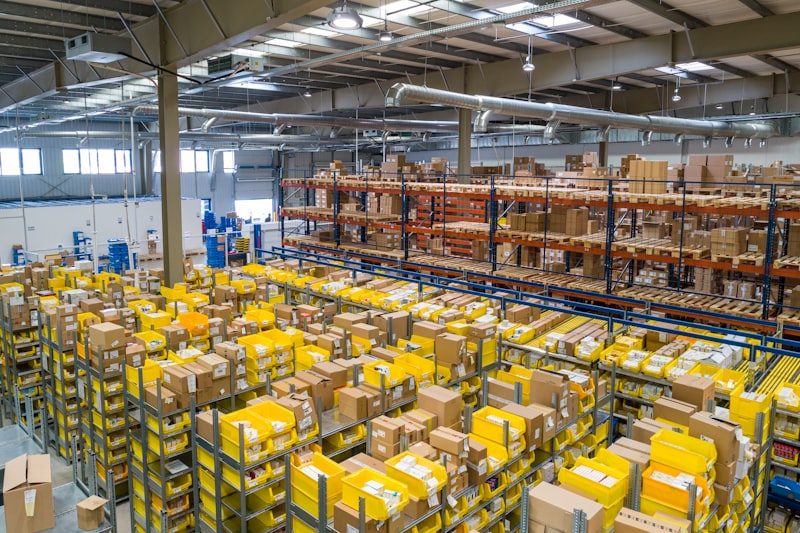
Every multi-store retailer has had this experience. Store A is sitting on three weeks of stock on a product that's moving quickly at Store B. Someone notices, calls their counterpart at the other location, arranges a transfer, drives the products over, and manually updates the inventory in both systems — if they remember to update it at all. The whole process takes hours of staff time, happens reactively rather than proactively, and often occurs after Store B has already had a stockout.
This scenario plays out thousands of times every week across the retail industry, and most operators treat it as normal. It isn't. The time wasted on manual transfer coordination, the stockouts caused by delayed responses, and the inventory errors created by inconsistent record-keeping represent a significant, measurable drag on business performance. The good news is that fixing this is one of the highest-ROI operational improvements a multi-store operator can make.
The Real Cost of Manual Transfers
When most operators calculate the cost of inventory transfers, they think about transportation — the cost of moving product from one location to another. That's the visible cost. The invisible costs are much larger.
Staff time spent coordinating transfers is consistently underestimated. A typical unplanned transfer might involve: a manager noticing the imbalance, a phone or message conversation with the other location to confirm availability and quantity, time to prepare and package the transfer, the actual transportation, unboxing and restocking at the receiving location, and manual inventory updates in both systems. For a single transfer, that's often 2–4 hours of combined staff time across both locations.
Then there's the cost of decisions made without good data. When managers rely on informal knowledge rather than real-time inventory visibility, they miss transfer opportunities on slower-moving products, over-respond to apparent shortages that aren't actually critical, and sometimes create imbalances in the other direction. A reactive, gut-driven transfer process consistently produces worse outcomes than a systematic, data-driven one.
Why Stockouts Are More Expensive Than They Look
When a customer comes in looking for a product that's out of stock, the direct revenue loss is the price of that sale. But there's more to it. Research consistently shows that stockout experiences have an outsized negative effect on customer loyalty — customers who experience stockouts are significantly more likely to shop at a competitor the next time. For a multi-location retailer, a stockout at one store is even more costly if the same customer would have been satisfied at another location had the inventory been managed better.
The opportunity cost compounds over time. A customer who has a poor experience due to a preventable stockout doesn't just lose you that transaction — they may not return at all. For a retailer with a strong repeat purchase rate, losing a regular customer has a lifetime value impact that dwarfs the original lost sale.
This is why proactive inventory management — identifying and correcting imbalances before they become stockouts — is so much more valuable than reactive management. The moment the system alerts you to a developing imbalance is before the customer is disappointed.
Building a Smarter Transfer Process
Here's how to shift from reactive to proactive inventory transfer management:
- 1Centralize your inventory visibility — real-time stock levels across all locations in one dashboard
- 2Set automated low-stock alerts with location-specific thresholds based on historical velocity
- 3Create transfer trigger rules: when Location A has X+ weeks of cover and Location B has Y- days, flag for review
- 4Define a standard transfer authorization process — who approves, what's the minimum quantity, how quickly must it happen
- 5Build transfer documentation into the workflow so inventory records update automatically
- 6Review transfer patterns monthly to identify products or locations with recurring imbalances
"Multi-store operators who automate inventory transfer alerts reduce stockout frequency by an average of 35% and cut transfer-related staff time by up to 60%."
Balancing Inventory Without Over-Transferring
There's a trap that many operators fall into when they first get serious about inventory balancing: they over-transfer. Seeing a potential imbalance on the horizon, they move stock proactively — and then demand changes, the transfer was unnecessary, and now both stores have suboptimal inventory.
The discipline is to use transfer triggers based on projected sell-through, not just current stock levels. A product with 20 units and 2 weeks of coverage is different from a product with 20 units and 12 weeks of coverage. The former might warrant a transfer from another location; the latter probably doesn't, especially if the receiving location is also well-stocked.
Algorithmic transfer recommendations that factor in sell-through rate, seasonal patterns, and upcoming promotions are significantly more accurate than gut-feel decisions. If you're managing more than 3–4 locations, the complexity exceeds what any human can reliably optimize without computational help.
Technology That Makes This Manageable
The minimum viable technology for smart inventory transfers is a system that shows you real-time stock levels across all locations in a single view, with velocity data attached. With that, even a manually-operated transfer process becomes dramatically more effective because the decisions are based on facts rather than estimates.
More sophisticated systems add automated alerts and transfer recommendations. Instead of a manager scanning through every product across every location each morning, the system surfaces the transfers that need to happen today. The manager reviews the recommendations, approves the ones that make sense, and the transfers are scheduled.
Fully automated transfer systems — where recommendations are generated, approved via a mobile workflow, and inventory records updated without manual data entry — are the goal for businesses managing five or more locations. The time saved is significant; the error reduction is even more valuable. When inventory records are accurate, every other decision that depends on them — purchasing, pricing, staffing — gets better too.
Frequently Asked Questions
Ready to Put This Into Practice?
Merchant Stack gives you the tools to automate, optimize, and grow your retail operation — starting today.
Request Early Access